


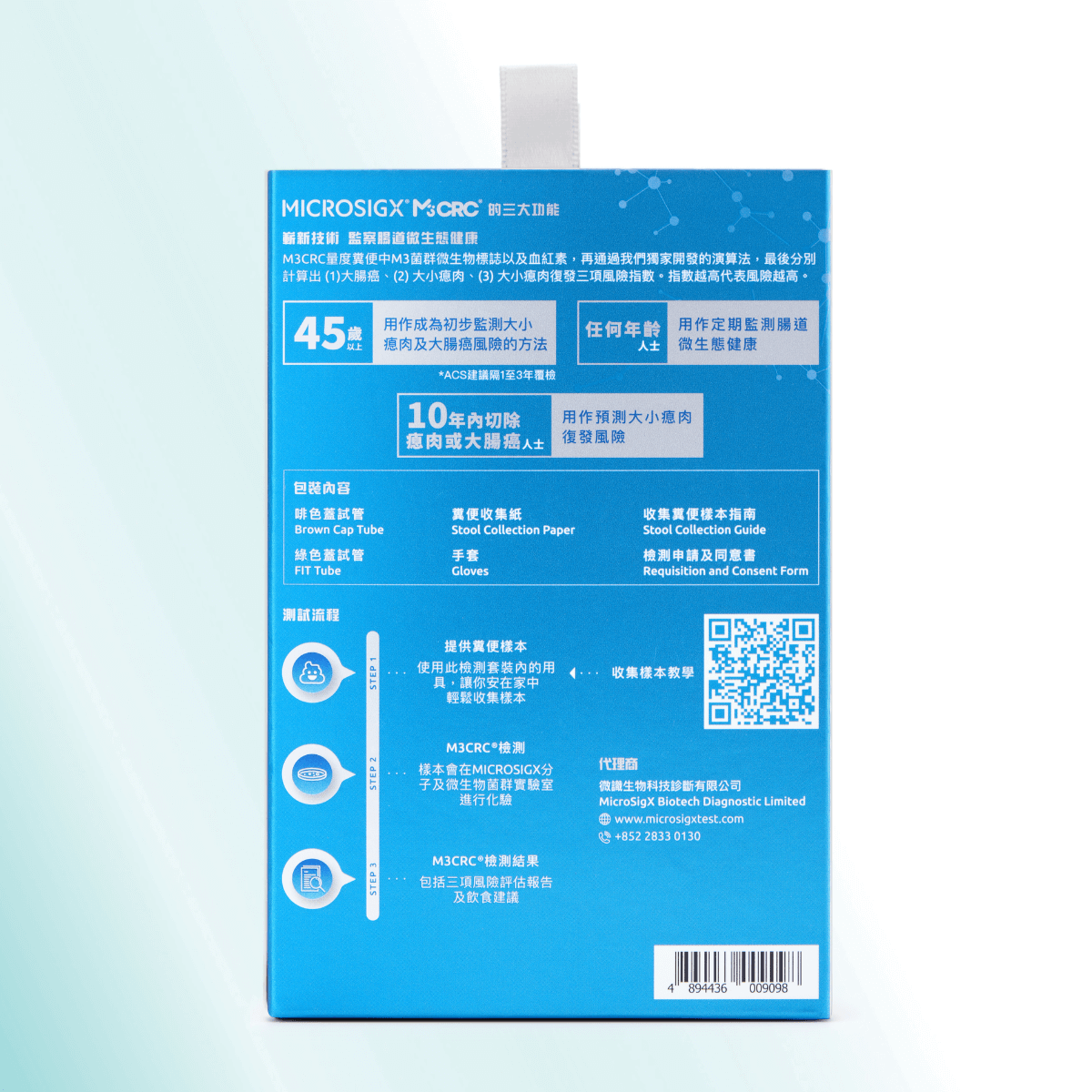
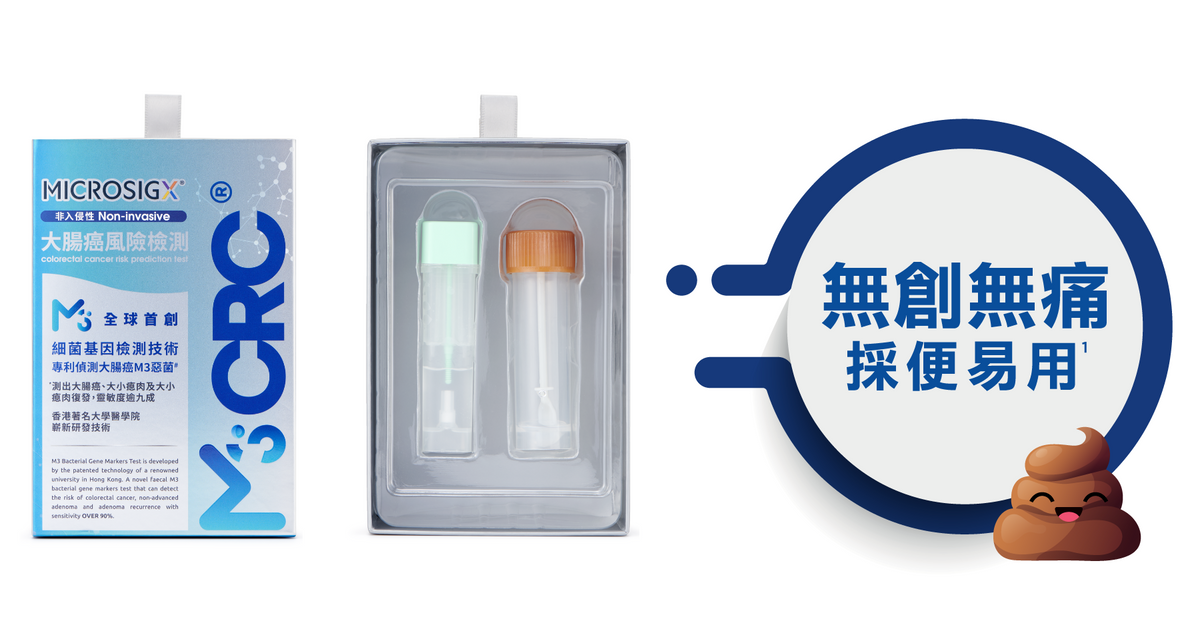
M3CRC 非入侵性大腸癌風險檢測 由香港著名大學醫學院研發


全球首創 M3細菌基因檢測技術可偵測大腸癌、大小瘜肉及瘜肉復發之非入侵性大腸癌風險檢測
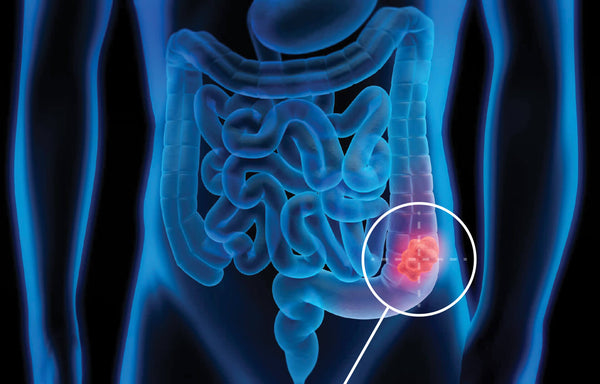
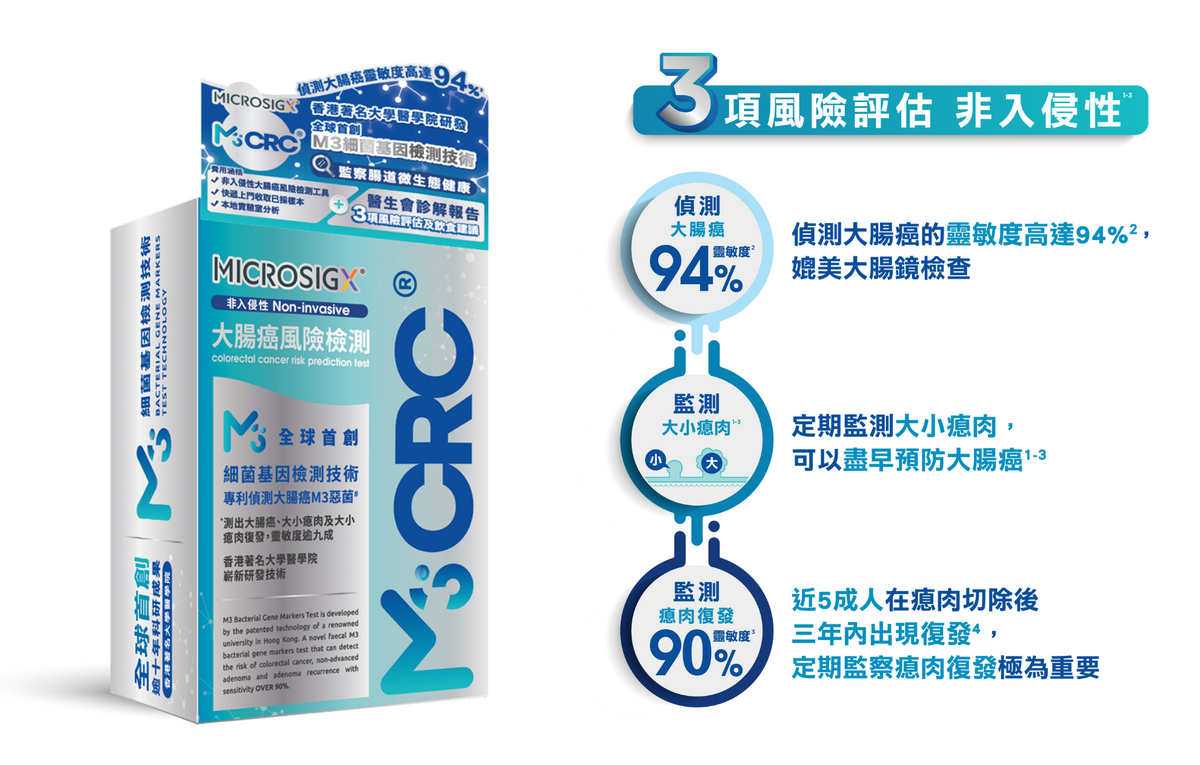
結直腸癌(俗稱大腸癌)自2013年起成為香港頭號癌症,並在致命癌症中排名第二位。研究指出,大部份大腸癌都是由小瘜肉演變而成,因此及早發現大腸癌肉對於預防大腸癌及改善存活率,有莫大的幫助。但小瘜肉並無痛狀不易察覺,因此需依靠特別的檢測才能偵測到。M3CRC 非入侵性大腸癌風險檢測是全球首創的新穎科研技術,是市面上唯一可偵測大小瘜肉的非入侵性大腸癌篩檢方法,而其偵測大腸癌的靈敏度更高達94%,相當於結腸鏡檢查(大腸鏡)。
小瘜肉如何變成大腸癌?
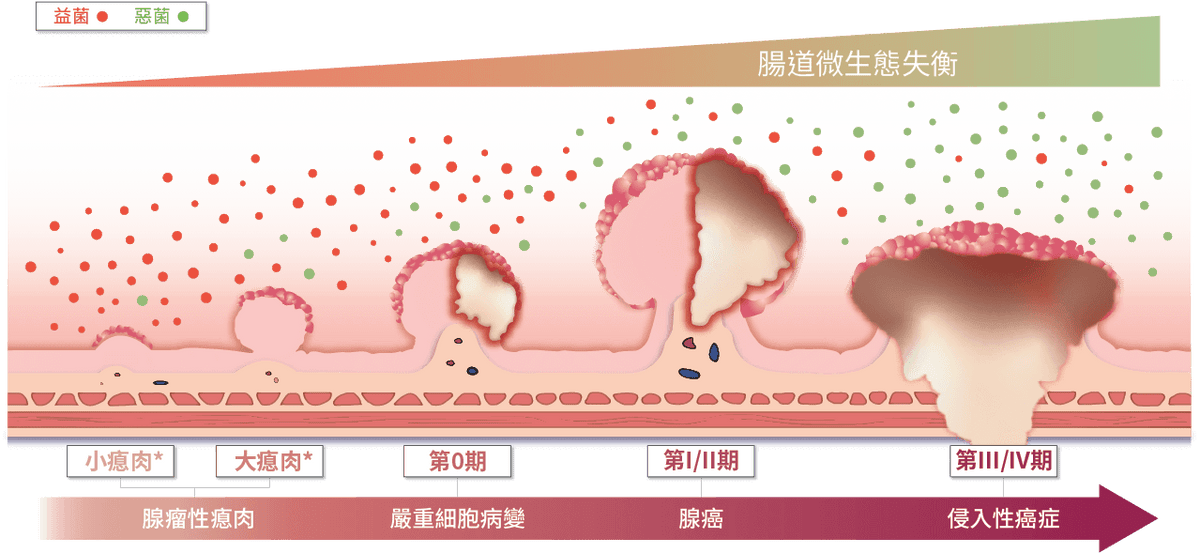
Illustration adapted from Metagenomic and Metabolomic Analyses Reveal Distinct Stage-specific Phenotypes of the Gut Microbiota in Colorectal Cancer, by Yachida et al., Nature Medicine, 2019 and Sporadic (Nonhereditary) Colorectal Cancer: Introduction, by Johns Hopkins Colon Cancer Center. https://www.hopkinsmedicine.org/gastroenterology_hepatology/_pdfs/small_large_intestine/sporadic_nonhereditary_colorectal_cancer.pdf
*小瘜肉指非進展期腺瘤(non-advanced adenoma)
已切除的瘜肉也有50%的機會復發
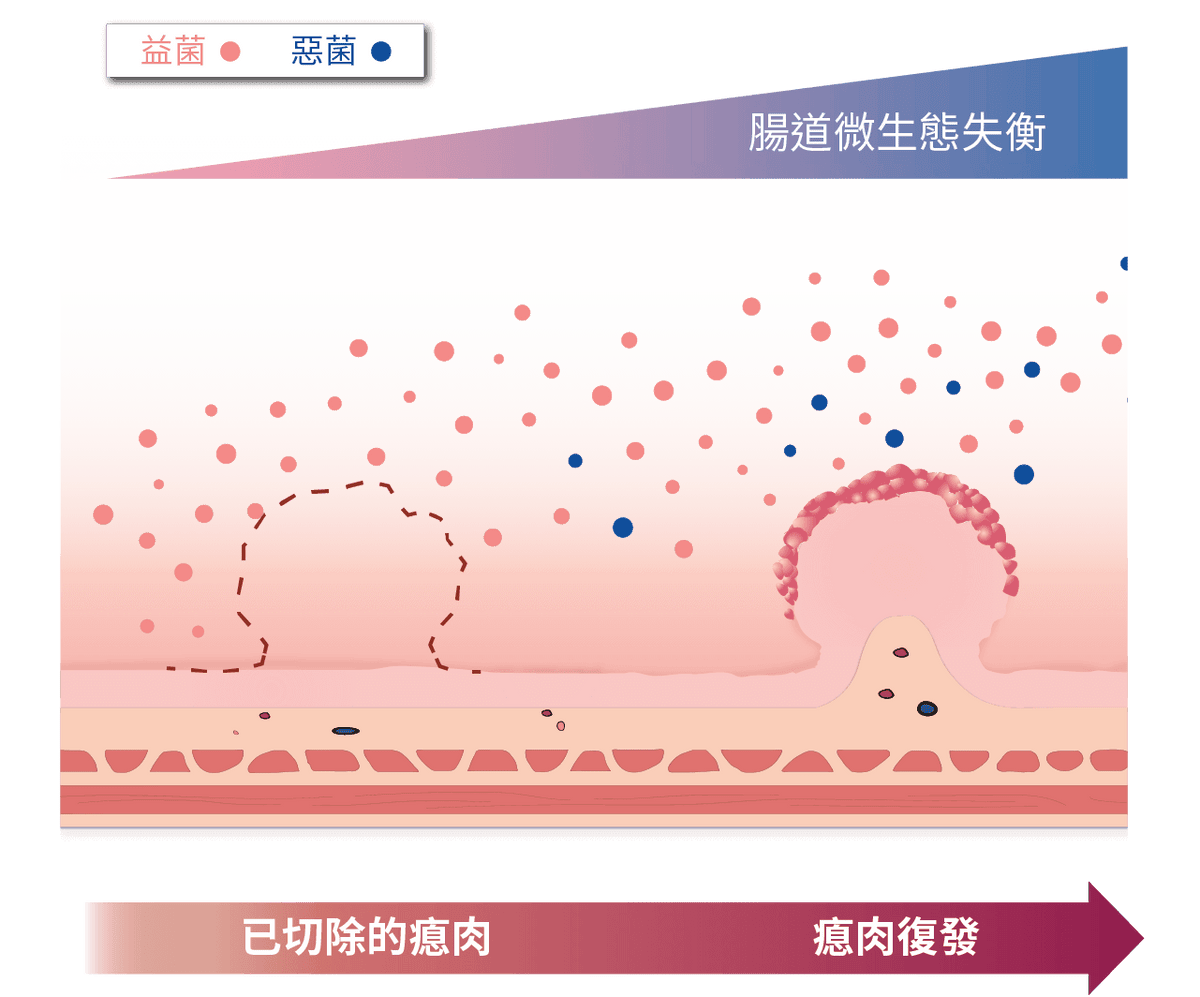
見"微"知著 - 揪出危險瘜肉⁵
腸道微生態與大腸癌息息相關,當我們的腸道長期暴露於失衡的微生態環境下,便會增加大腸癌形成的風險。香港著名大學醫學院腸道微生態科研團隊利用獨有的亞洲人完整因大數據,發現一系列腸道惡菌與大腸癌息息相關,稱之為M3腸惡菌,量度這些惡菌不單可以偵測大腸癌(靈敏度高達94%¹),還可偵測到大腸癌肉,包括大小瘜肉及大小腺肉復發風險。另外,更可顯示與大腸癌相關的腸道微生態健康指數。透過飲食或調節腸道微生態,有望改善我們患上大腸癌的風險。
腸道微生物與大腸癌的形成
我們不能改變基因,但能透過改善腸道微生態來改善健康
腸道微生態主宰人體健康。人體中有約90%細胞是來自微生物,它們大部分住在腸道當中。腸道微生物之間的相互作用形成腸道微生態。研究發現:

只有12-35%的大腸癌與遺傳有關⁶

大腸癌患者的腸道微生物
與健康人士截然不同 ⁷

腸道微生態失衡會促進大腸癌形成⁸
M3CRC 的特色
全球首創可偵測大小瘜肉及瘜肉復發之非入侵性高靈敏度大腸癌風險檢測

透過檢驗糞便內的細菌組合,偵測大腸癌、大小瘤肉及大小瘤肉復發的風險

採便易用、無創無痛

偵測大腸癌的靈敏度高達94%,相當於結腸鏡(大腸鏡)檢查

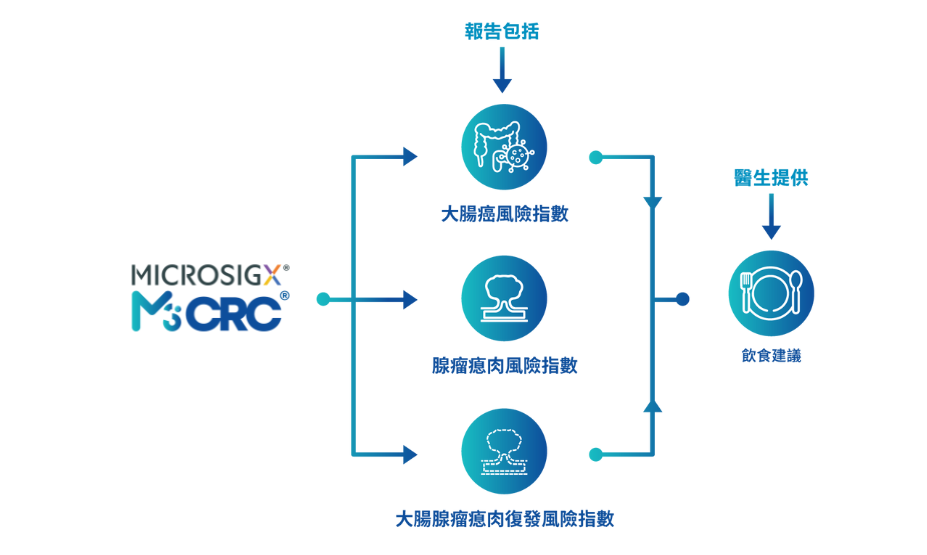
與其他非入侵性檢測相比,更能偵測到大腸小瘤肉

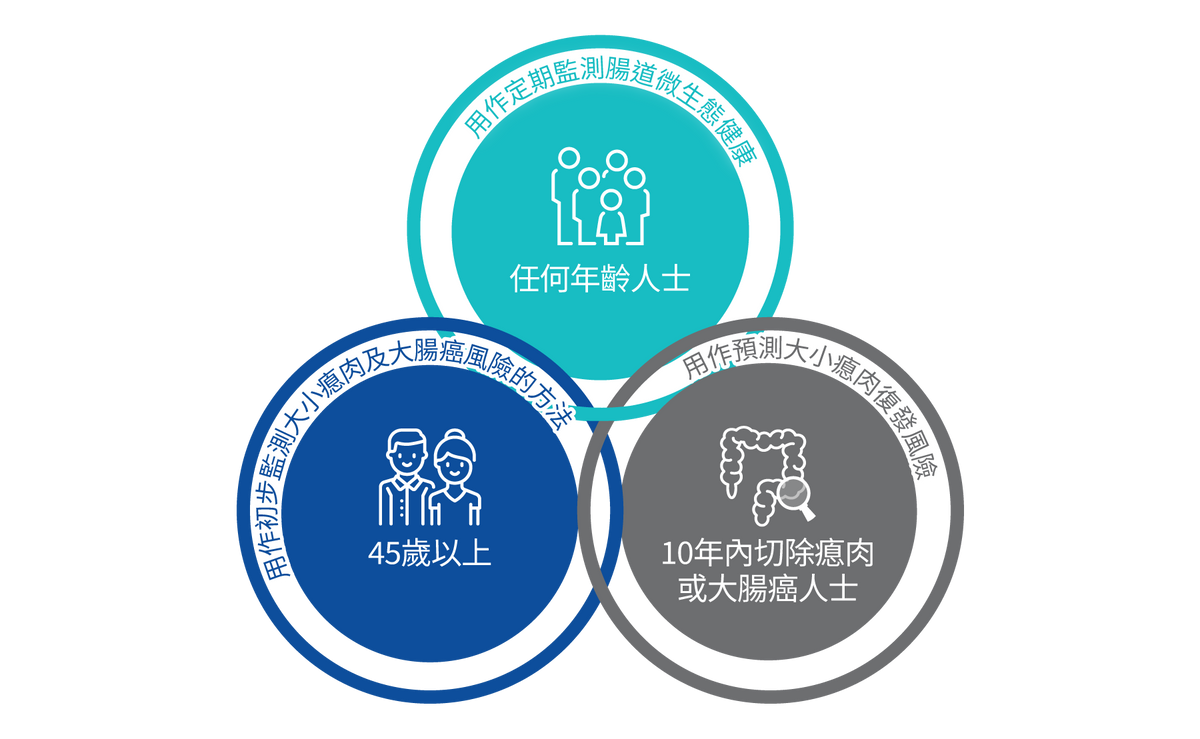
除風險評估外,報告還會提供飲食建議,有助改善腸道健康
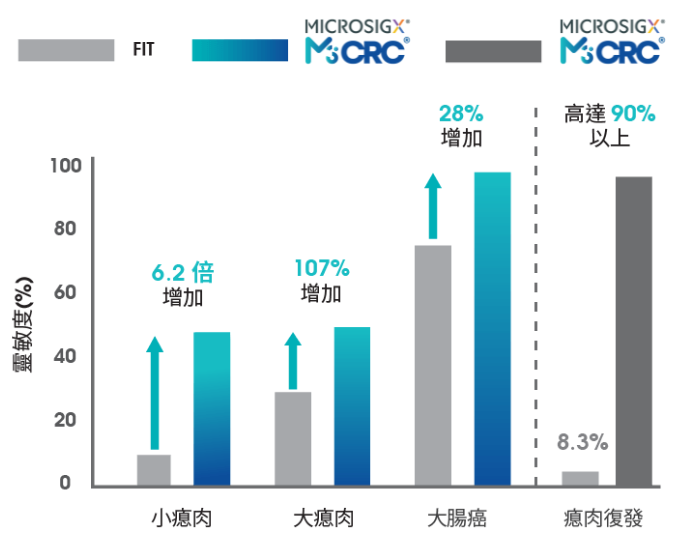
| M3CRC | *靈敏度 |
|---|---|
| 大腸癌 | 94% |
| 大瘜肉 | 56.8% |
| 小瘜肉 | 44.2% |
| 瘜肉復發 | 最高可達 90%³ |
*特異度為85%
†大瘜肉指進展期腺瘤; 小瘜肉指非進展期腺瘤

檢測方法比較
M3細菌基因檢測技術是由香港著名大學醫學院研發。M3細菌基因是科研團隊利用了亞洲人宏基因大數據,分析逾 1,100 名癌症患者 (當中包括大腸癌或大腸瘜肉患者) 所識別出的一組特定細菌基因1。這個M3腸惡菌與大腸癌息息相關1。量度這些惡菌群以及血紅素,再通過科研團隊開發的演算法,能有效偵測大腸癌 (靈敏度及特異度*亦分別高達94%及85% )1,2,相較起傳統非入侵性大腸癌篩檢方法如大便隱血測試 (FIT) 更為精準, M3CRC偵測小瘜肉的靈敏度更高達5倍,能媲美大腸鏡檢查。
M3CRC 適用人士
嶄新技術 監察腸道微生態健康
高風險分數反映腸道微生態正處於有利大腸癌的形成的惡性狀態。

為確保檢測準確性, 在收集糞便樣本之前,請盡量:
2周內維持一般的飲食習慣;
4周內避免使用抗生素;
4周內避免使用益生菌;
避免在痔瘡出血、月經及肚瀉糞便呈水狀的日子採便;
小心根據本指南採集樣本。採集後,於24小時內交還樣本。